China is a story written in threads of gold—of emperors and dynasties, and of the splendor of a nature that surrounds and defines you. As you turn these pages of time, you discover, in striking contrast, its imperial past and its futuristic present, coexisting in a harmony that feels almost improbable, yet profoundly real.
There are places on Earth that are not merely seen, but felt with one’s entire being—places where an ancestral spirit calls to you through a deep sense of recognition, as if you are encountering a beauty that has always existed within you. Guilin, in China, is such a place: a point on the planet where nature has composed an epic poem, and humanity, with its ingenuity, has become a precious verse within its structure. It is one of those destinations that emanates a steady, persistent calling—meant for the traveler willing to listen. More than that, it is a destination that seeks you out—the one capable of understanding that the true journey begins when the outer landscape becomes a mirror of the inner one.
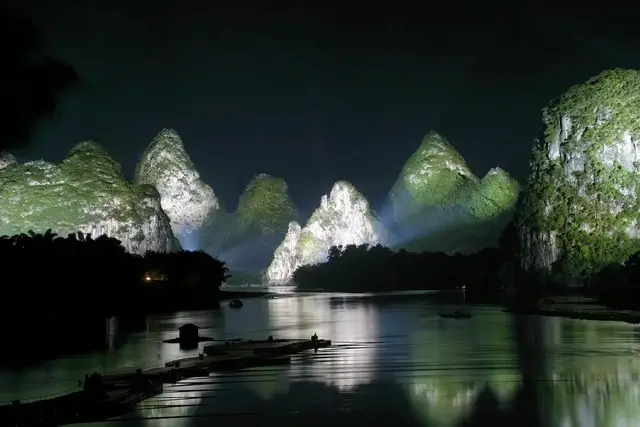
The true journey begins when the outer landscape becomes a mirror of the inner one.
Here, history entwines its roots with rock and river in such a natural symbiosis that the boundary between legend and reality becomes nearly imperceptible. For over two millennia, since the time of the Qin dynasty—when the first Emperor of a unified China, Qin Shi Huang, opened the Lingqu Canal, an engineering marvel connecting the Yangtze and Pearl rivers—this region has been recognized as a vital artery of Chinese civilization. The karst hills, these geological witnesses rising from immemorial time, have silently borne upon their slopes the gazes of emperors, poets, and monks alike, all seeking within their fantastical forms the ultimate meaning of existence. The Tang dynasty, the golden age of Chinese poetry, consecrated Guilin as an aesthetic ideal; masters of verse, such as Han Yu, wrote with devotion that “the landscape of Guilin is the finest under heaven,” transforming a geographic space into a sacred cultural landmark—a collective dream of perfect harmony.
In Guilin, the hills—green giants that seem to uphold the sky—rise abruptly from the plains, sculpted by millennia of rain and wind, silent guardians of human life. People have built their homes at their sacred feet, have worshipped in hidden caves, and have sought refuge in their protective shadows. The Li River, a living thread of silver, is the very flow of history: a waterway that has carried war boats and fishing vessels, bolts of silk and human hopes, nourishing an entire region and inspiring artists across centuries to immortalize its beauty in brush and ink.
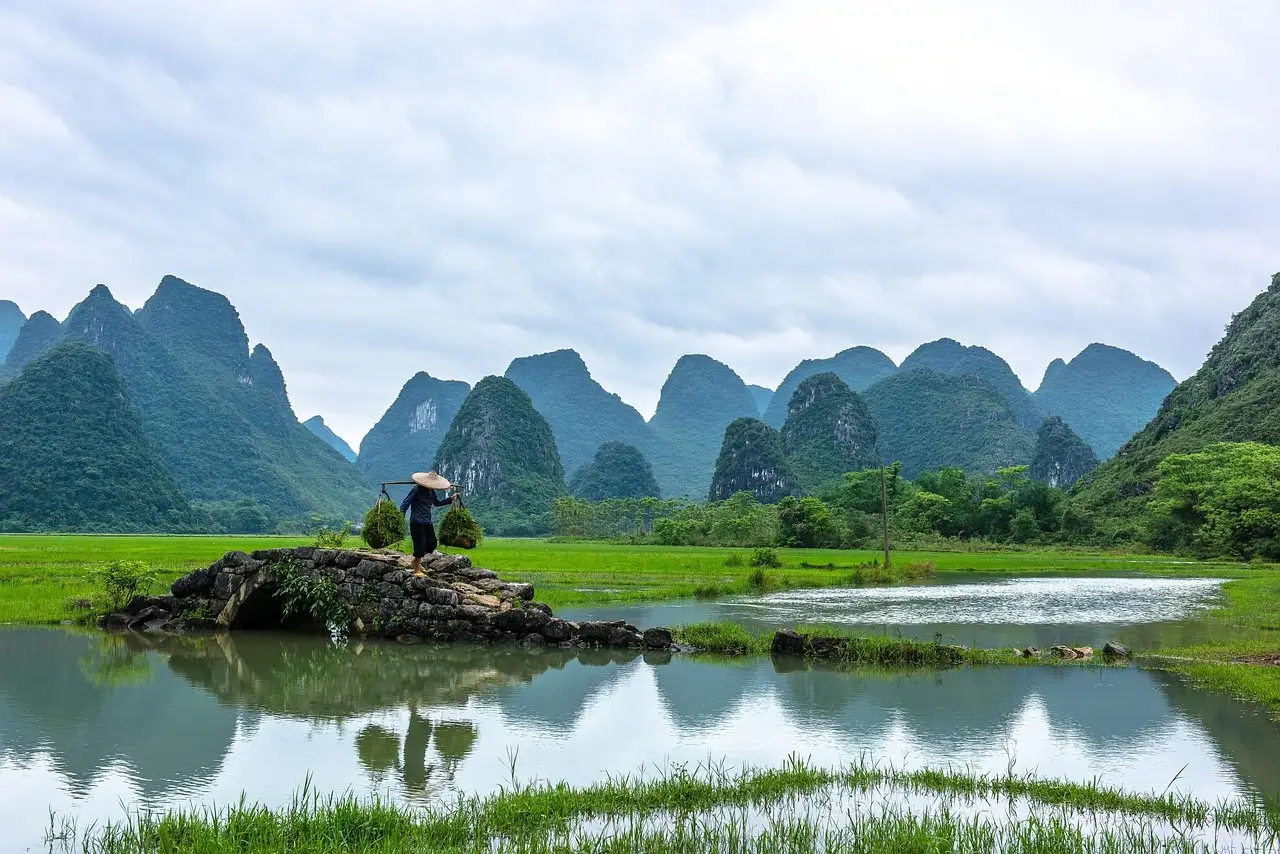
Arriving here, the traveler steps into a cultural and spiritual continuity thousands of years deep. The scent of earth after rain is the same that once stirred ancient farmers; the breeze that rustles the bamboo leaves once cooled the brow of a Zen monk in meditation within one of the many hidden temples; and the osmanthus tea you drink today preserves the same delicate fragrance that once delighted imperial courts. The traditions of the Yao, Zhuang, Dong, and Miao peoples—with their intricate attire and age-old rituals—are not staged performances, but living proof of a history that endures. They reveal a presence in which harmony between humans and place remains strong, and where progress does not demand destruction, but rather a careful and respectful integration.
There are places in the world that astonish and leave their mark, others that set you free, and others still that call you back again and again—because their emotion is immortal..
Thus, the authentic experience of Guilin unfolds slowly, like a silk scroll: from wandering among the rice terraces of Longji, where each contour seems to follow the breathing of the earth, to the moment your boat glides along the river and passes into the shadow of a monumental hill, beneath a solemn, cooling benediction. The discovery of a stone carved with ancient verses, near the discreet entrance of a cave, feels like a hand extended from the past into the present. In this corner of the world, you become aware that beauty is a force—a spiritual magnet that has drawn you your entire life, and which, once answered, transforms you irreversibly.
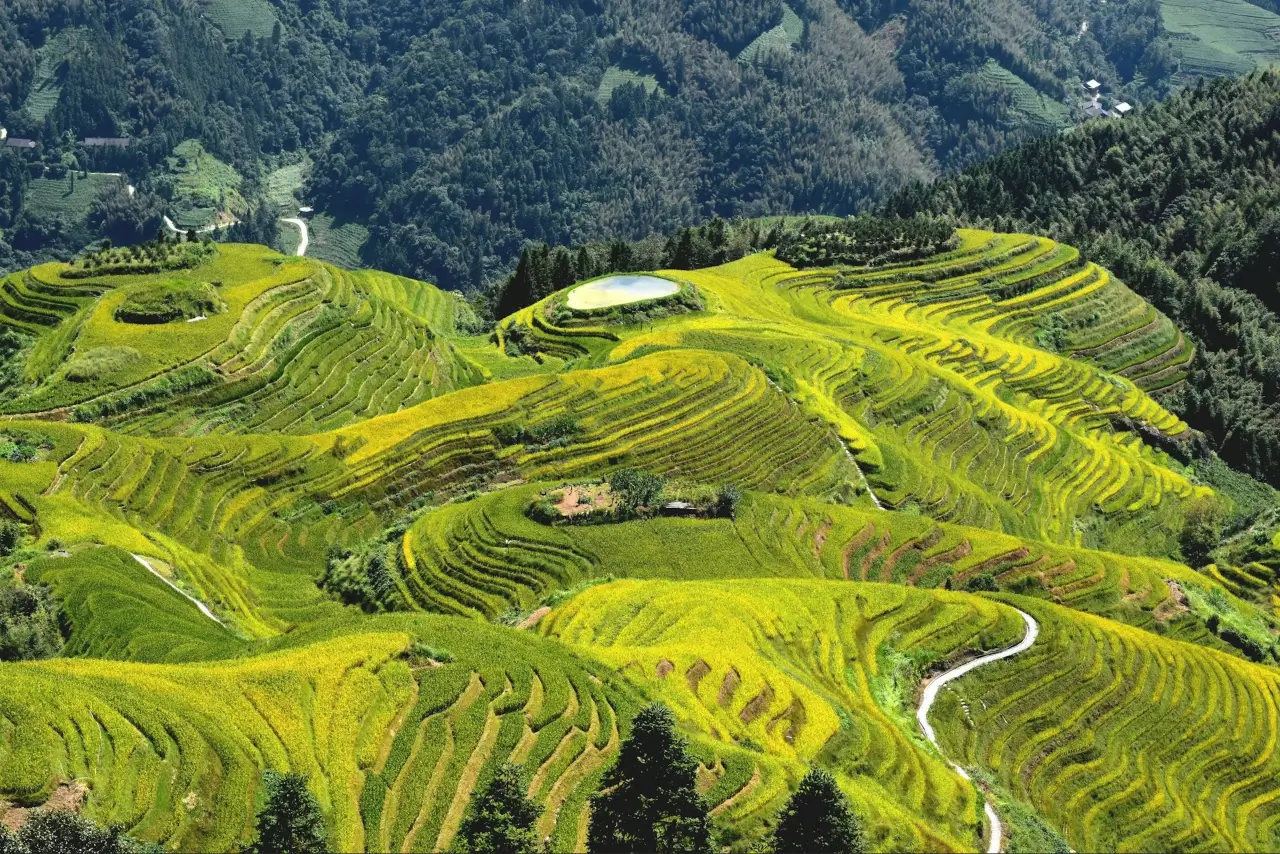
Guilin is, therefore, a confirmation: that there exists upon this Earth a magnetism of perfection—places that preserve the memory of history in an authentic form and that can fill the soul with a singular energy, as intense as a ray of light within a wandering spirit.
Guilin is the place that seeks you—so that you may remember who you are, in the presence of nature’s eternal grandeur.