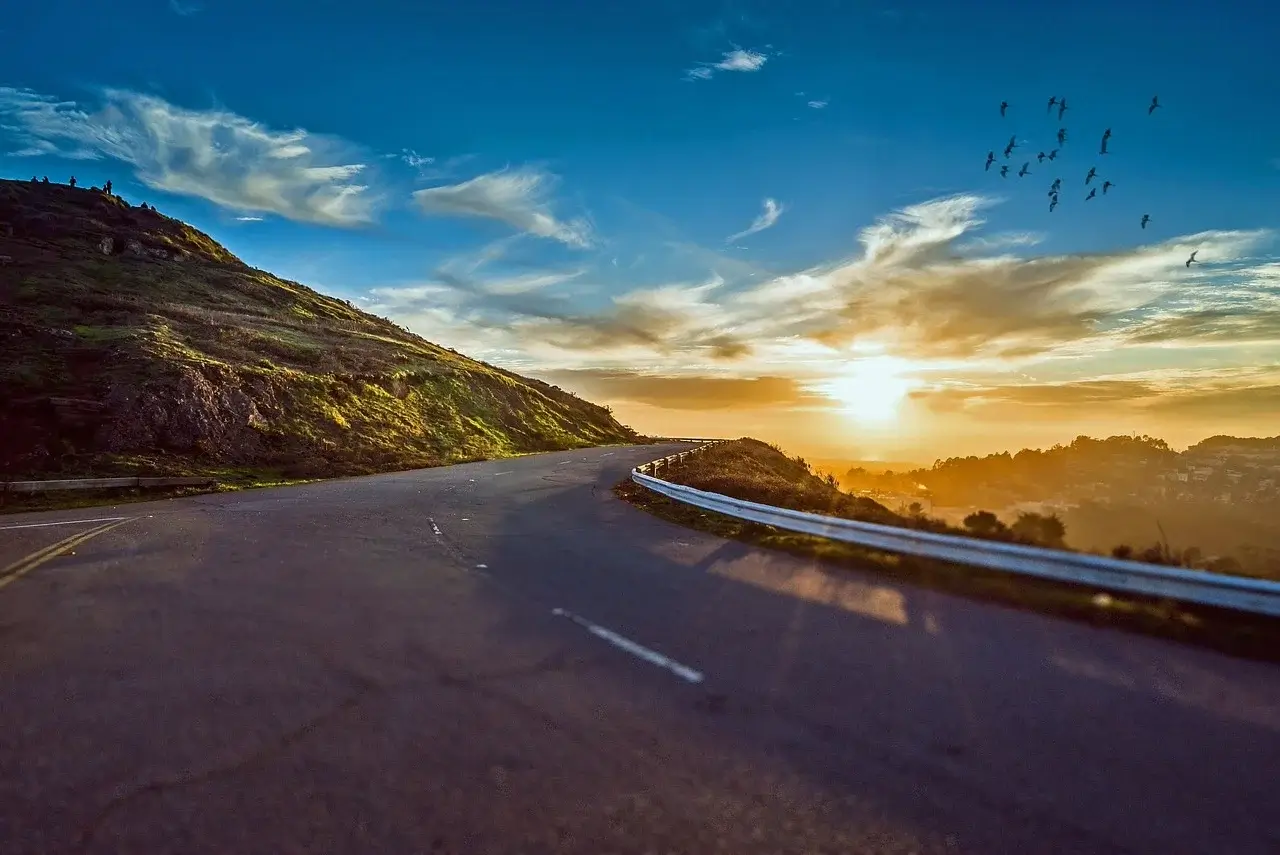
Travel, for me, is a way of resonating—with places, with people, with the quiet sediment of history and culture that lingers in a landscape. I do not choose where I go, not entirely. More often, a place seems to choose me. It finds its way into my imagination, slips into dreams of distant civilizations, and through a subtle choreography of chance, I arrive exactly where, somehow, I was meant to be.
There are, of course, other ways of traveling. Some pursue destinations as trophies—proof points in a carefully curated narrative: I’ve been here. Or worse, as accidents dressed up as fate: a finger dropped onto a map, a dramatic insistence that this, now, must be destiny. They prepare for these journeys with a certain confidence, convinced that arrival will transform them—that they will emerge renewed, heroic, their effort validated not by depth of experience but by the sheer fact of having gone.
And yet, upon arrival, something falters. The dream resists reality. The place refuses to conform to expectation. Disappointment sets in quietly at first, then with sharper edges—irritation at trivial details, a creeping dissatisfaction, a sense that something essential has been withheld. Instead of rebirth, there is opacity. Instead of revelation, a kind of distance that cannot be crossed. And so the search continues: another destination, another attempt to align the world with one’s own image of it. The blame falls easily—on guides, on logistics, on circumstance—but rarely on the premise itself. Perhaps the fault lies in how we begin.
The places that matter are not the ones you reach, but the ones that remain within you
What if we approached destinations differently—not as conquests, but as encounters? What if we allowed ourselves to feel, first, the quiet pull of a place? To sense, somewhere beneath thought, its particular gravity? To imagine the air of it brushing lightly against us, carrying traces of another time? To watch history unfold not as information, but as presence—scene by scene, season by season, as though projected across the vast interior screen of the mind?
And then, to meet people not as part of the scenery, but as its living expression. To notice the ease of a smile, the texture of a handshake, the rhythm of a life lived differently from our own—and to ask, gently, what sustains that difference. In this way—seeing with the mind, feeling with the heart—we begin to inhabit a place rather than merely pass through it. And in doing so, we find that certain journeys begin to feel less like choices and more like recognitions.
It is there, in that alignment, that a different kind of freedom emerges. Not the curated freedom of five-star ease, of scheduled indulgence and polished surfaces—but something quieter, more essential. A freedom that exists between you and the place itself. Stripped of excess, you begin to notice what remains: beauty that moves you unexpectedly, traditions that reveal themselves slowly, the steady presence of history beneath your feet. You listen—not just to stories, but to the land itself, to the faint echo of its legends.
Destinations are not simply places to visit. They are layered presences—traces of ancient worlds, echoes of vanished civilizations, continuations of lives rebuilt upon their remains. They are, at once, memory and projection. And they cannot be felt at a distance. They require participation: to see, to feel, to resonate.
Over time, I came to understand that every place carries its own energy—and that you take a fragment of it with you when you leave. Not as something to possess, or display, but as something to carry quietly, indefinitely. It settles somewhere within you, altering your internal landscape in ways that are difficult to name, but impossible to ignore.
Tourists often seek adventure, pleasure, comfort. And there is nothing inherently wrong in that. But the deeper meaning of travel lies elsewhere—in how a place reshapes you from the inside, in how your perception shifts upon return, in how much of that place you have allowed to remain within you.
That is when the realization arrives, almost gently: it was never about finding the destination. It was about allowing yourself to be found.
There are places in the world that surprise you, others that unsettle and transform you, and some that call you back again and again, their emotional imprint refusing to fade.
The truth is, you don’t find the place. The place finds you—and decides whether you were ready to see it.