For Citadellique Editorial, travel begins in curiosity and matures through understanding. It asks for openness, patience, and the willingness to enter into dialogue with the world beyond appearances.
There are places that ask to be discovered slowly — places that require attention, silence, and a certain inner presence. Encountering them can become a moment of clarity, sometimes even revelation.
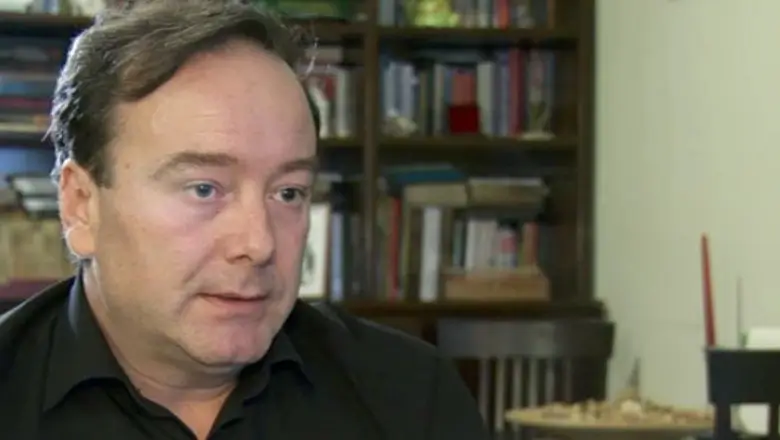
It is within this spirit that we meet Lucian Ciuchiță — writer, journalist, philosopher, and guide of journeys — a man of inquiry for whom direct experience, reflection, and writing naturally complete one another.
Across six continents, his travels have led him through regions where history still shapes the present, and where people give meaning and texture to every place.
This conversation explores how travel may become a form of personal knowledge, how landscapes and encounters leave lasting traces upon thought, and how the road, when followed attentively, begins to tell a story both about the world and about oneself.
1. The Writer as an Island — A Message Sent to the World
There are moments when the writer resembles an island: withdrawn in order to observe more clearly, yet connected enough to send a message outward. How did your experiences on islands such as Sri Lanka or Mauritius shape this state of creative retreat, and what part of your message about the world finds its way into your writing?
To be on an island is to live constantly at the border between creation and infinity. It is this paradox — physical limitation and boundless openness — that shapes the writer’s gaze.
In Sri Lanka, solitude is not emptiness, but a space filled with presence. I learned this in Kandy, where the silence of the temple, accompanied by the scent of lotus and wax, and the touch of polished stone beneath my feet, opened a true interior introspection. Retreat there became a supreme form of reflection.
The writer who withdraws does not flee the world; he simply hears more clearly its hidden murmur. In such moments of recollection on an island, I discover that all important answers are, in truth, questions better preserved.
Mauritius taught me a different lesson in marginality. There, the coral reef surrounding the island is a living frontier — a submerged wall where protection and vulnerability are one and the same.
I understood that true freedom does not lie in mastering the ocean, but in knowing its thoughts and moods.
The writer learns, then, that to be an island is to be aware of one’s own fragility, and of the invisible bonds that tie us to everything beyond the horizon.
Writing born of such islands becomes a lighthouse. Isolation grants perspective, while connection to the waters of the world gives direction — like any vessel navigating the dark, always searching for shore.
What I wish to send into the world from this island of words is a light shaped as a question.
And sometimes, to shape a clear question is already to build a bridge toward understanding.
2. Africa – the road that became literature
Africa holds a singular place in your journey, both as a life experience and as a source of literary inspiration. How did the realities you encountered there shape your forthcoming novel, The Last White Lion, and what do you believe this story can say about the world we live in today?
For me, Africa is an inner geography, a sacred space of memory, where “home” means a perfect balance between humanity, nature, and animals. It is a harmony that makes you feel, with every beat of your heart, that the beauty of nature—its flora and fauna—is something divine. The mastery of Nature, even in the wild, is proof that we human beings have not yet truly learned how to value beauty. We reduce it to photographs and videos, shared across social media. But beauty is meant to be contemplated. It moves you. It overwhelms you.
Every journey through Africa has been a return through time. I crossed it as one reads a great book, in its own language—from the golden dunes of the Sahara to the burning savannas of the Masai Mara, from the Roman walls of Leptis Magna to the Ottoman palaces of Algiers—patiently turning the pages of that immense volume we call history, and falling irreversibly in love with its story.
I heard the voices of vanished empires carried on the desert wind. I travelled it from north to south, beginning with the blue cities of Morocco. In Algeria, the Roman ruins of Timgad stand like a frozen hourglass, while the Berber casbahs speak of the endurance of a world that kept its architecture hidden like a secret. In Tunisia, the vast amphitheatre of El Jem, still resonant with the memory of gladiatorial combat, is an echo that begins with the Numidian tribes, passes through Rome, and reaches the Muslim veils of Kairouan. And Egypt is the eternal voice of hieroglyphs, an immortal dialogue with the gods, where Time itself is merely another face of eternity.
But Africa does not live only in the past. It lives through the wild and majestic present of national parks such as Chobe and Etosha. There I learned another shade of existence: the priority of stillness, the virtue of patience, the respect owed to an elephant crossing the road and bringing traffic to a halt. I saw giraffes dancing in the heat that shimmered above the grasslands, lions watching our passing with indifference, and I understood that here, harmony is a condition of survival. That interconnection completely reshaped the mirror of my inner world.
From this deep respect for Africa’s balance came my novel, The Last White Lion—the story of a ranger fighting to save what can no longer be replaced: authentic wilderness. It is a struggle against moral collapse, but also against poachers. The novel is the story of a man who comes to realise that saving this sacred harmony is, in truth, the saving of a part of his own humanity.
In Africa, I found both an existential point of reference and a sense of adventure. There, silence is the presence of a primordial rhythm. Meditation happens in the cool expectancy of late afternoon, while watching a buffalo or an antelope cross endless plains. Dialogue with oneself becomes a natural consequence of such vastness, of recognising that we are nothing before the grandeur of nature and the balance it has created.
Each time I return, I rediscover myself, because Africa has shown me who I am and how I am connected to all that exists. It is the homeland of my forgotten roots, the only place where the word “home” carries the meaning of wholeness. And every time I go back, I feel as though I am meeting once again the finest version of my inner consciousness.
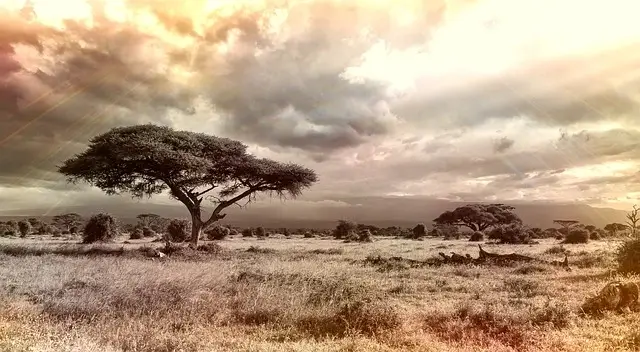
The savanna — where questions rise with the dust
3. The People Who Give Places Their Face
Very often, the people of a place reveal more about a destination than any landmark ever could. Which encounters marked you most deeply in your travels, and how did they change the way you understand the cultures you passed through?
Very often, the most important map of a country is the one imprinted in your memory through the glances and gestures of people you meet by chance. Before they are landscapes or magnificent monuments, places are like faces—capable of transforming an ordinary traveller into a witness of worlds that might otherwise have remained undiscovered.
High in the Peruvian Andes, more than four thousand metres above sea level, I met an old man spinning alpaca wool in front of a stone hut. His face was furrowed by the cold mountain winds, his fingers knotted like the roots of an ancient tree. He spoke no Spanish, only Quechua, and I understood only what my local guide translated for me. But when he lifted his eyes and offered me a coca leaf, sensing that I was struggling with the thin air, I felt as though I had been handed a key to a world where generosity is never negotiated, and hospitality does not wait to be requested.
That man, whose name I never learned, was a descendant of the Incas. In his simple gesture one could read thousands of years of coexistence with the Andean gods, devotion to the earth called Pachamama, and a wisdom passed down through the way one plants potatoes on high terraces and turns one’s face toward the sun at the equinox.
That afternoon, I understood that the true Machu Picchu is not only the stone citadel visited by millions of tourists, but also this anonymous man, still spinning wool as his ancestors had done five hundred years ago, indifferent to fallen empires and redrawn borders. He did not preserve tradition as though it were a relic in an imaginary museum; he lived it in every drop of his being, just as the earth retains its moisture long after the rain has ceased.
At the other end of the world, in the heart of the magnetic metropolis of Shanghai, the Jade Buddha Temple lifts its curved roofs like an island rising from an ocean of concrete and glass. There, within walls that survived the fall of the Qing dynasty and the reconstruction of 1928, I met an elderly monk who kept watch over the seated Buddha statue—that majestic two-metre figure carved from a single block of white jade, brought from Burma in 1882 by the monk Huigen, glowing softly in the half-light of the jade hall.
He did not speak to me of scriptures or the Four Noble Truths. Instead, he opened his palm and invited me to touch the stone. I felt at once that the jade was cold at first contact—a deep coldness, born from the ancient heart of the earth, from the mountains of Myanmar where it had been quarried centuries ago. Beneath my fingers, the stone began to change, slowly, almost imperceptibly, as the warmth of my hand entered it.
The monk smiled and said only this, in broken English:
“Jade is the only stone that never forgets where it came from. When touched, it remembers that it was once warm, in the heart of the mountain. You warm it, and help it remember.”
That evening, walking back through a city dazzled by neon light, I understood that I had taken part in an exchange of memory. The jade was cold because it carried within itself the temperature of great depths, of geological time, of millennia of waiting. And yet, at the gentlest human touch, it responded. It warmed. For a few fleeting moments, it became the accomplice of our fragile warmth.
The monk had no need to explain the Buddhist doctrine of the interconnection of all things; his gesture, together with the silent response of the stone, said everything. True enlightenment is the capacity one acquires to respond—as jade responds to the hand, as the ephemeral responds to eternity through acceptance.
Looking back, I realise that these two men—the peasant of the Andes and the Buddhist monk of the Jade Temple—shared the same fundamental lesson. One offered a coca leaf to ease the sickness of altitude; the other offered the touch of stone to ease the sickness of solitude. Even stone can speak of generosity when it meets an open hand.
When I speak of these encounters, I do not wish to reconstruct with precision words I may have heard imperfectly, or gestures I may have interpreted too generously. I only wish to keep alive the echo of an understanding that changed me irreversibly: that a culture is known through the way its people offer a coca leaf to a weary stranger, or teach you to feel how a stone millions of years old grows warm beneath your touch.
For travel is nothing more than a chain of such fragile and unrepeatable encounters, and the true treasure we bring home is the certainty that beyond every linguistic barrier and every cultural difference, there exists a universal language of humanity—understood only through open palms and a clear gaze.
4. History Lived, Not Merely Told
You have travelled through regions that were once the cradle of great civilisations. How did direct contact with places such as Egypt, Morocco, Peru, or China help you understand history as a living experience rather than simply information found in books?
History books cannot reproduce the scent of the Nile at dawn, when light pours itself over the colossi of Abu Simbel, four thousand years old. Nor can they convey the coolness radiating from the stones of Karnak even at noon, when the sun falls vertically, like a punishment laid upon the earth.
Egypt opened its arms to me through the Great Pyramids, overwhelming in the perfection of their geometry and in their defiance of every constructive logic. Later, in Luxor, on a scorching afternoon, I stood with my back pressed against one of the columns of Karnak’s hypostyle hall, closed my eyes, and let the stone speak.
With the inward eye, I felt something no manual of Egyptology can ever transmit: continuity. The same sun warming the stone today had warmed it when the priests of Amun performed their rites. The same shadow had stretched itself across the hieroglyphs. The same dry wind, rising from the desert, had carried the same fine dust.
Time here is a spiral forever returning upon itself, and I—the traveller from a forgotten corner of the world—was merely the latest in an endless line of pilgrims who had sought in stone the answer to the same question: how can that which is eternal ever die?
Morocco speaks to us of metamorphosis. Here, history is a circle that returns again and again to the same point, enriched by each revolution.
Essaouira, ancient Mogador, set upon the Atlantic coast, is like a page first written by Phoenicians and Romans, erased by the Portuguese, rewritten by sultans, and annotated by the Berbers. Writers of the world gathered there for decades—Orson Welles, Paul Bowles—drawn by Morocco’s miraculous capacity to absorb every influence without surrendering its essence.
Tangier is the gate through which two worlds gaze at one another without ever touching. Spanish influence still pulses in the paso doble rhythms heard in old bars. Phoenicians, Romans, Vandals, Byzantines, Arabs, Portuguese, English, Spaniards, French—all passed through, yet none remained master. Tangier continues to look across the Strait of Gibraltar, knowing that Spain is but a lost province of the same Mediterranean dream.
Marrakech is the heart of Morocco beating without pause. Jemaa el-Fna Square is the oldest open-air theatre in the world, a stage upon which the same play has been performed for nearly a thousand years: storytellers, snake charmers, dancers, and water sellers adorned with brass bells. When the sun goes down, you understand that Marrakech lives beside you in every passing moment.
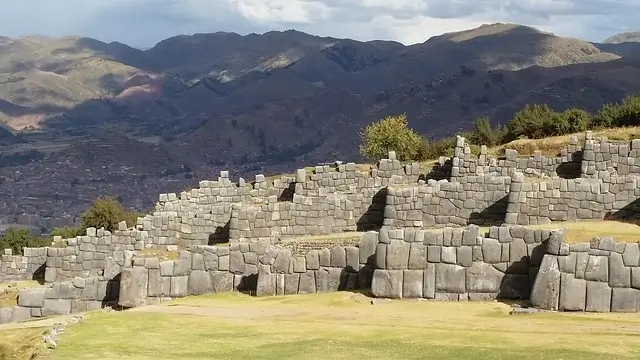
Peru greeted me through a stone at Sacsayhuamán. It is the famous Inca wall above Cusco, where polygonal blocks interlock with a precision that defies every architectural theory—without mortar, without visible seams, in astonishing perfection.
I stood there for long minutes with my palm pressed against its cold surface, trying to feel intention beyond form. Pre-Columbian civilisations built for eternity. European cathedrals rise toward heaven in a Gothic impulse, as though trying to escape the earth. Inca stones, by contrast, cling to the ground with majestic skill. They accept gravity, embrace it, and transform it into a partner in dialogue.
China offered me the most profound encounter with immortality in Xi’an, before the Terracotta Army. You stand inside those vast halls and, for a moment, the word history loses all meaning. Thousands of clay warriors stand in battle formation, as they have stood for twenty-two centuries, awaiting an order that will never come.
Archers, infantrymen, horsemen, generals—each with a face entirely his own, singular and unrepeatable. For unlike any other army in history, the Terracotta Army is a collective portrait of an entire nation: each man transformed into clay, each feature preserved with hallucinatory fidelity.
The First Emperor, Qin Shi Huang, unified China, yet his true legacy is this obsession with immortality carried to its furthest extreme. Eight thousand soldiers, eight thousand lives, eight thousand stories fixed forever in an instant of clay.
In Xi’an I understood what lived history truly means: to confront the gaze of those who once were. These soldiers looked at me through their clay eyes across twenty-two centuries and seemed to say: We were here. We existed. We shall not be forgotten.
This living history cannot be read in books. One must walk upon the sands of Giza, descend into the depths of Xi’an, lose all sense of time in the square at Marrakech, and press one’s cheek against the stones of Cusco.
These journeys taught me that the pharaohs are not dead—they sleep within the stone of the pyramids, awaiting an open hand to awaken them. The terracotta soldiers were not defeated by time—they still wait in battle formation for an order to rise from their clay sleep. And the Inca stones are unfinished sentences from an ancient language we are only beginning to decipher.
Living history is that page upon which every stone still preserves the memory of the hands that carved it.
Stone at Sacsayhuamán, Cusco — where precision, gravity, and eternity meet in silence.
5. Japan — A Dialogue with Yourself
There are destinations that invite you more to listen than to explore. How did Japan function for you as a space of introspection, inner discipline, and self-discovery, and what lessons did you carry home from that experience?
Japan is a threshold that teaches you how to be present. I arrived there without great expectations, because I was not seeking revelations; I was drawn instead to a certain form of inner clarity. From the very first days, I felt that this country offered subtle states of mind and quietly invited you to pay attention.
One of the symbols that stayed with me most deeply was the torii gate. At first glance, it seems almost insignificant: two pillars, a crossbeam, nothing monumental. And yet, each time I passed beneath one, I had the distinct feeling that I was being invited to change something in the depths of my being. Beyond the torii, nothing outwardly appeared different, because the torii asks for presence. The threshold does not mark entry into another place, but it certainly leads you into another emotional state.
I understood then that in Japan there are no radical separations between the sacred and the ordinary. They coexist, they touch, they respect one another. Passing beneath a torii returns you to the same world, but with greater attention, greater responsibility. The repetition of these gates—sometimes encountered along long, almost hypnotic paths—functions as an inner exercise: each step cleanses a little of your inner turbulence, each threshold reaffirms the intention to be present in your own life.
I found the same lesson in other Japanese spaces of transition: arched bridges, mountain paths, simple rituals repeated with an almost tender precision. In Japan, nothing is abrupt, theatrical, or achieved through rupture. Transformation happens slowly, through continuity. Japan seems to tell you constantly that true change requires perseverance.
For me, this journey became an exercise in purification, like passing beneath a torii gate and realizing that it is not the place that changes, but the way you inhabit it. I began to leave behind the excess of thoughts spinning without purpose, unnecessary explanations, the haste that was always pulling me forward. I learned that introspection does not require isolation, but presence: to truly sit upon the quiet paths of Zen gardens, to cross arched bridges step by step, to do one thing at a time, to hear the bells, to feel the wind, and to allow meaning to reveal itself naturally—like a landscape that opens slowly, but only to those willing to see it.
I left Japan with the conviction that true transformation lies in consciously and repeatedly crossing the threshold between automatism and presence. You do not need to become someone else. Japan cannot change you; it offers, with rare elegance, the setting in which you learn to change yourself.
6. Places That Call You Back
After years on the road, there are destinations that remain with you and to which you feel compelled to return. Which places have drawn you most deeply, perhaps even magnetically, and what is it that keeps calling you back?
After two decades of travel, I have learned that there is a fundamental difference between the places you visit and the places that visit you. The former you choose through recommendations or the curiosity of the moment; the latter choose you, building their nest deep within memory and never truly leaving, becoming existential anchors around which, years later, even your soul begins to organize itself.
Sri Lanka was the first place to call me back, though I did not understand why. I had arrived there almost by chance, drawn by names that sounded like incantations—Kandy, Polonnaruwa, Sigiriya—and I left convinced I had seen all it had to offer. Yet only a few months after returning home, I began dreaming night after night of the golden sands of Mirissa, of the heavy fragrance of temple flowers mingled with the scent of hot earth after rain. I would wake with the taste of Ceylon tea in my mouth and the feeling that somewhere, thousands of miles away, a part of me had remained behind, waiting for my return.
I went back, and only then did I understand that it was not the beauty of the landscapes—though the island is one of the most generous creations on Earth—nor the hospitality of its people, though a Sinhalese smile quickly makes you forget you are a stranger. It was something far subtler and far older: a certain quality of place that resonated perfectly with my inner rhythm, something I had never encountered anywhere else.
I felt this with painful clarity in Kandy, before the Temple of the Tooth—not during the Puja ceremony, when drums resound and thousands of worshippers bring lotus offerings, but early the next morning, when the temple was nearly empty and an elderly monk slowly swept the inner courtyard with measured movements, gathering dead leaves into small, perfectly symmetrical piles. I watched for many minutes and realized that I had returned to Sri Lanka in order to learn how to cleanse myself of all that I am not, so that at last only the essence might remain—an essence I discovered in the simple, almost liturgical gestures of daily life.
Africa was another story altogether. If Sri Lanka called me back through gentleness, Africa claimed me through vastness. I first arrived in Kenya fifteen years ago believing I understood beauty. I had read books and studied reproductions of Renaissance painters. Then I saw the Masai Mara at sunrise, when the sun rises directly from the heart of the savannah and turns the grasslands into an ocean of liquid gold. I understood then that literature cannot fully contain African landscapes in words, because Africa itself is the origin of all metaphors.
It was not only beauty that brought me back, but silence—those moments on safari in the Masai Mara or Amboseli when everyone waits, without knowing exactly for what: perhaps a lion emerging from the brush, a herd of elephants crossing the road, or sunset settling over the plain. In that waiting, an inner transformation takes place. You cease to be an observer and become part of the landscape.
I left Africa after my first visit believing I had forgotten it, but in truth it had come home with me in the form of a question I did not know how to answer: How can one live authentically in a world that has forgotten how to wait? For years I searched for the answer in other places, among other cultures, through other experiences, until I realized that the only place where I might find it was Africa itself. So I returned—and kept returning.
Sri Lanka and Africa are, for me, the only places I have loved differently. Europe is my home, South America is a fascination, Asia is an endless library, but Sri Lanka and Africa are the roots I chose for myself, because they anchor me more deeply with every return.
Today, when travellers ask why I keep going back to the same places, I answer simply: because I have not finished the conversation with them. Every encounter leaves something unresolved. Sri Lanka and Africa are the mirrors in which I look to see whether I am still the same person, and the mirror replies: you have changed, but do not forget—you are welcome all the same.
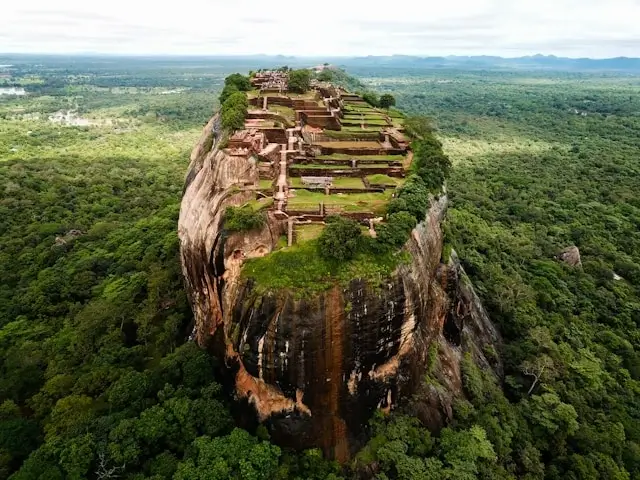
This, I believe, is the most important message a place can offer a traveller: the joy of becoming someone new each time you return. Come back with open hands and a clear heart, and you may hear the words you have waited a lifetime to hear: Karibu tena. Welcome home again.Sigiriya, Sri Lanka — a fortress in stone, where memory rises above the jungle and silence guards the past.
The Art of Setting Out
Looking back on your experiences, what would you like to share with those who travel today? How should they set out so that a simple trip becomes a true journey—one that remains with them long after they return home?
If I were to entrust those setting out into the world today with a single thought, it would be this: begin your journey with an open heart—only then will you be able to receive what each place has to offer at its deepest, most emblematic, most mysterious level.
Read the history of the places you visit. Learn about the civilizations that once inhabited them, the hands that built them, and the lives that dwell there today. Only then will you be able to see, beyond the stone, the chisel that shaped it, the hopes of those who prayed beside it, the stories of those who defended it. A temple or a marketplace does not reveal its secrets to everyone, but only to those who arrive prepared to listen.
Respect is the only currency accepted everywhere—in every language, in every corner of the world. Respect for history, for the civilizations that came before us; respect for the people you meet, for their way of being. You travel in order to understand—but understanding begins precisely where every instinct of superiority ends.
Feel things fully, rather than rushing onward. Authentic travel is measured in moments of complete presence, not in the number of landmarks checked off a list.
Travel, in the end, is a form of rediscovery—and rediscovery may take a lifetime. All the roads of the world are, ultimately, only different paths leading into the depths of your own heart—the place you would least have expected to reach.
And just as every true journey continues long after the moment of return, the dialogue with Lucian Ciuchiță naturally extends into the spaces where writing and travel experiences intertwine—an invitation to reading, reflection, and memorable discoveries.